
 Russian
 French
 Spanish
 Arabic
 Thai
Thai Indonesian

In our previous article, we discussed the design of new structural systems for long-span composite bridges from three perspectives: structural form innovation, material selection and composite design, and structural detailing, along with an analysis of steel formwork supporting solutions. While innovative structural design lays a solid foundation for bridge spanning capacity and overall performance, transforming these design concepts into safe and reliable engineering entities requires in-depth overcome of a series of key technologies. As a follow-up, this article systematically introduces the key technology research on new structural systems for long-span composite bridges from four dimensions: mechanical performance and structural optimization, fatigue durability design technology, anti-corrosion and durability technology, and intelligent monitoring and health assessment.
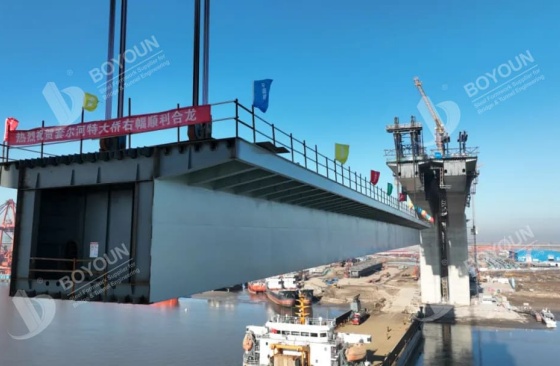
Mechanical performance analysis is the fundamental basis for ensuring the safety and stability of long-span composite bridge structures. Only by comprehensively and accurately understanding the force conditions of a bridge under various working conditions can a scientific basis be provided for rational design and optimization. By constructing high-precision finite element models and combining them with dynamic and static simulations involving multiple complex working conditions, the stress distribution, deformation patterns, and potential stress concentration zones of the overall bridge structure and key components under different loads can be meticulously revealed, thereby accurately identifying potential weak links. Structural optimization, based on the results of mechanical analysis, employs multi-objective optimization algorithms to comprehensively consider structural safety, economy, and construction feasibility, making reasonable adjustments to key parameters such as bridge geometry, material selection, component cross-sections, and connection methods. This process not only encompasses the improvement of overall structural stiffness and stability but also develops specific optimization strategies for nonlinear behaviors, local buckling, and fatigue damage under different working conditions, thereby enhancing the bridge's deformation resistance and load-bearing efficiency. Through optimized design, the proportion of steel and concrete materials is reasonably arranged, reducing structural self-weight while increasing bearing capacity, achieving efficient resource utilization. The deep integration of mechanical performance analysis and structural optimization not only significantly extends the service life of bridges and improves their safety assurance levels but also reduces routine maintenance and repair costs, promoting continuous innovation in design concepts and technological advancement of long-span composite bridges, steering bridge engineering toward greater intelligence and higher performance.
Long-span composite bridges are subjected to numerous cyclic loads during long-term operation, making fatigue performance a critical aspect of the design process. Fatigue durability design technology combines theoretical analysis, experimental research, and numerical simulation to accurately predict the fatigue life of key structural locations. The use of high-performance steel and concrete materials, coupled with rational joint design and stress control measures, reduces the probability of fatigue crack initiation. In the design phase, finite life and non-destructive testing techniques are integrated to achieve dynamic assessment of fatigue risks. For structural detailing, emphasis is placed on eliminating stress concentration, improving welding processes and connection methods to enhance fatigue resistance. Through scientific fatigue design and monitoring and early warning measures, the bridge structure is ensured to maintain sufficient safety margin throughout its entire service life, significantly improving bridge reliability and operational safety.
Anti-corrosion design is an extremely important aspect enabling long-term normal service of long-span composite bridge structures. Bridge structures are often exposed to various corrosive environments, such as atmospheric corrosion, marine salt spray, and industrial pollution, which significantly affect the performance of structural materials. For steel structures, due to their inherent corrosion characteristics, multi-layer coating systems, corrosion-resistant alloys, and cathodic protection techniques are employed to form a systematic protection system. For concrete components, high-performance concrete mix designs and surface sealing treatments are adopted to improve impermeability and carbonation resistance. In structural detailing, particular attention is paid to avoiding the retention of moisture and corrosive media, thereby ensuring the continuity of protection at structural details. Durability design combines material selection with structural detailing optimization, effectively extending structural life while reducing maintenance frequency and related costs, thereby improving the overall economic efficiency and safety level of the bridge.
With the continuous development of information technology, intelligent monitoring systems have been widely applied in long-span composite bridges and have become a crucial means of bridge health management. By deploying various sensors, such as strain gauges, accelerometers, temperature and humidity sensors, and fiber optic sensors, real-time collection of structural force conditions, deformation states, vibration characteristics, and environmental parameters can be achieved, realizing comprehensive dynamic monitoring. By combining big data and artificial intelligence algorithms to analyze and evaluate the collected data, structural anomalies and potential risks can be detected promptly, thereby preventing safety accidents. Intelligent monitoring systems not only improve the scientific basis and timeliness of bridge maintenance but also provide data support for fatigue life assessment, anti-corrosion maintenance, and related matters. In the future, intelligent technologies will drive bridge management toward digitalization and intelligence, further enhancing the level of structural safety assurance.
The research on key technologies for new structural systems of long-span composite bridges covers multiple aspects, including mechanical performance optimization, fatigue durability design, anti-corrosion protection systems, and intelligent monitoring and assessment. The coordinated advancement of these technologies is central to ensuring the safety, durability, and economical operation of bridges. As a professional manufacturer of bridge steel formwork, we continuously follow the development of cutting-edge technologies and are committed to providing high-precision, highly adaptable formwork systems and construction support for various composite bridge projects. If you have any needs regarding related technologies or products, please feel free to contact us.

We focus on turn-key solutions and types of formwork for Bridge and Viaduct Construction at home and abroad since 2006.


International Department: Room 2507-2508, Tower C of Wanda Plaza, Tongzhou District, Beijing 101118, China.
+86-13021287080
info@boyoun.cn

