
 Russian
 French
 Spanish
 Arabic
 Thai
Thai Indonesian

As the core load-bearing components of viaducts, the construction quality and efficiency of pier columns and pier cap directly determine the overall safety, durability and economy of bridge projects. Based on the special working conditions of construction in mountainous areas, this paper systematically discusses the application key points of precast construction technology for pier columns and pier cap. It analyzes from the dimensions of construction preparation, key technology implementation and on-site management & monitoring, aiming to provide practical references for improving the construction quality, efficiency and ecological compatibility of mountain viaducts.
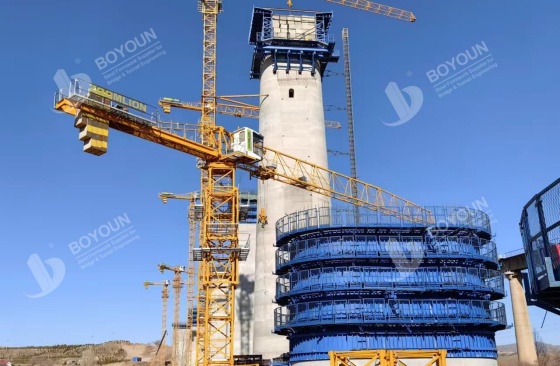
Construction preparation and material selection are the key links to ensure the successful implementation of mountain viaduct projects. This stage is not only related to the overall progress and quality of the project, but also directly affects construction safety and subsequent maintenance management. Construction preparation work includes formulating detailed construction plans, conducting on-site surveys, and purchasing and deploying construction equipment. By fully investigating the topography, geological conditions and climatic environment of the construction site, the construction team can formulate scientific and reasonable construction plans to ensure the smooth progress of all processes.
In the preliminary preparation for bridge construction, material selection plays a key role. It is directly related to the structural stability and service life of the bridge. To cope with the harsh climatic challenges in mountainous areas, it is particularly important to select corrosion-resistant, durable and high-strength construction materials. For example, high-performance concrete and durable steel can be adopted. The application of these materials can significantly extend the service life of the bridge. In the early construction stage, it is necessary to complete communication and coordination with all relevant units. Special attention should be paid to the coordination of infrastructure such as water supply, power supply and roads to ensure the smooth progress of the project. Before the project starts, technical exchanges and safety education must be carried out. This enables the construction team to fully grasp construction standards and safety rules, and effectively reduce potential safety risks during construction.
The key technologies in the construction process play a vital role in the construction of mountain viaducts. They also directly affect the safety and durability of the bridge. Construction in mountainous areas faces complex environmental challenges, such as continuous steep mountains and variable climates. During construction, appropriate construction technologies should be selected according to the particularity of the terrain. For example, for steep terrain, mechanical equipment such as aerial work platforms and cranes are necessary. They can ensure the safety and efficiency of the construction process.
The adoption of precast construction technology can effectively improve the efficiency and quality of construction. precast components are manufactured in factories and quickly assembled on-site. This measure can significantly shorten the construction period, reduce the impact of harsh weather on the project schedule, and improve the precision of component production, thus ensuring the overall quality of bridge construction.
Real-time monitoring and regulation of technical activities are equally crucial for ensuring project quality and safety during construction. During bridge construction, key indicators such as structural deformation, stress and temperature should be tracked in a timely manner. This is to identify and prevent potential risks in a timely fashion and maintain construction safety. On the construction site, change-sensing instruments such as strain gauges and displacement sensors are installed. These devices can send the detected information in real time to support scientific decision-making at the project management level. With such real-time monitoring information, construction managers can adjust response strategies in a timely manner and effectively prevent potential construction safety problems.
The application of quality control technology is particularly important and cannot be ignored during construction. To ensure the stability of the bridge structure, it is necessary to strictly control the quality of raw materials during concrete pouring, accurately adjust the mix ratio, and strengthen the curing work after pouring. This is to meet the predetermined strength and durability standards.
A detailed construction plan should be formulated on the construction site, including construction schedule, personnel arrangement, equipment deployment and material supply, to ensure the timely completion of all tasks. At the same time, on-site management needs to strengthen the control of the construction environment. It should ensure the safety and tidiness of the construction area and reduce the occurrence of accidents. The application of real-time monitoring technology can significantly improve the management level of the construction site. By installing monitoring equipment such as video surveillance and sensors, construction managers can obtain real-time status information of the construction site. These technologies can not only help to detect problems in the construction process in a timely manner, such as equipment failures and personnel safety hazards, but also dynamically track the construction progress for timely adjustments.
Construction site management should focus on interaction and coordination with various parties, including government agencies, supervision institutions, design institutions and construction organizations. During project implementation, regular communication arrangements are established. Channels such as meetings and reports are used to ensure that relevant parties are informed of and support the project progress, and to quickly respond to technical and management challenges. At the same time, a feedback mechanism should be established. Monitoring data from the construction site and opinions from all parties are used to continuously optimize construction plans and management strategies, so as to ensure the smooth achievement of project goals.
The lack of safety supervision on the construction site will bring serious risks. For the construction of viaducts in mountainous areas, in view of the particularity of such projects, the construction team needs to formulate feasible safety management plans. The plan should include safety knowledge education, accident emergency response and regular safety inspections. During construction activities, safety rules must be strictly followed. Regular safety reviews and potential risk searches should be conducted to ensure the safety of construction workers. Appropriate safety measures including fences and warning signs must be equipped on the construction site to ensure the safety of construction personnel.
In summary, the research on precast construction technology for pier columns and pier cap in mountain viaduct projects not only represents the innovation of engineering construction technology, but also reflects the comprehensive consideration of efficiency, safety, environmental protection and other aspects in modern engineering construction. Through continuous exploration and practice, precast construction technology will provide more solid technical support for mountain infrastructure construction, and promote its development towards higher standards and quality.

We focus on turn-key solutions and types of formwork for Bridge and Viaduct Construction at home and abroad since 2006.


International Department: Room 2507-2508, Tower C of Wanda Plaza, Tongzhou District, Beijing 101118, China.
+86-13021287080
info@boyoun.cn

