Russian
 French
 Spanish
 Arabic
 Thai
Thai Indonesian

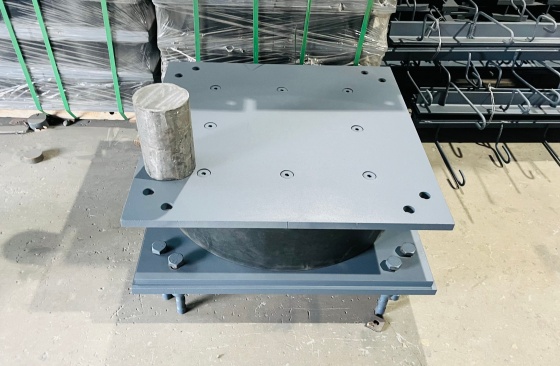
Bridge bearings are core load-bearing component that connects the superstructure and substructure of a bridge. Acting as the "joint" of the bridge structure, its primary function is to reliably transfer various forces from the superstructure to the substructure – including dead loads, live loads (e.g., vehicle and pedestrian loads), as well as forces induced by temperature variations, concrete shrinkage and creep, earthquakes, and other factors. Meanwhile, it allows the superstructure to undergo a certain range of rotational and horizontal displacements, thereby reducing internal structural stress and ensuring the stable operation and structural safety of the bridge.

Bridge bearings are widely used in various bridge engineering projects such as highway bridges, railway bridges, municipal bridges, cross-sea bridges, and viaducts. Their performance directly impacts the load-bearing capacity, stability, durability, and service life of bridges. High-quality bridge bearings must feature core characteristics including strong load-bearing capacity, flexible displacement and rotation capabilities, wear resistance, seismic resistance, aging resistance, and corrosion resistance. They should be adaptable to climatic conditions in different regions (such as high temperatures, severe cold, and high salt spray in coastal areas) and complex engineering geological environments, providing long-term, reliable support and cushioning protection for bridge structures.
With the advancement of bridge engineering technology, bridge bearings have developed into a diverse product system. They can be precisely selected based on structural forms, stress characteristics, and application scenarios, meeting the construction requirements of bridges with different spans, load classes, and operating environments. Bridge bearings are thus indispensable key components in modern bridge engineering.
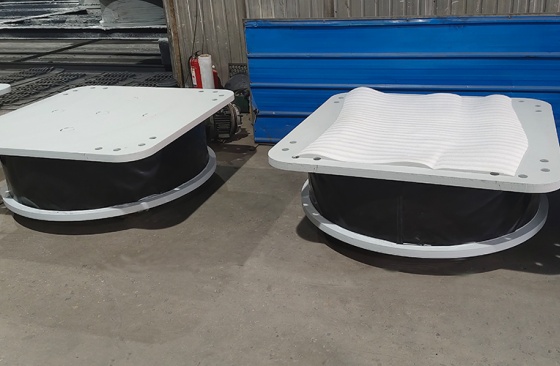
Superior Elastic Deformation Capacity
Rubber materials possess excellent elasticity and ductility, enabling the bearings to accommodate multi-directional displacements (longitudinal, transverse) and rotational deformations of bridge superstructures caused by temperature variations, concrete shrinkage and creep, and external loads. This effectively reduces internal stress concentration in bridge structures and ensures operational stability.
Outstanding Vibration and Seismic Damping Performance
The inherent damping characteristics of rubber allow the bearings to absorb and dissipate dynamic loads from vehicle traffic, as well as seismic energy during earthquakes. Specially designed types like high damping rubber (HDR) bearings and lead rubber bearings (LRBs) have enhanced seismic isolation effects, which can significantly reduce the impact of earthquakes on bridge structures and improve overall seismic resilience.
Simple Structure and Convenient Installation & Maintenance
Compared with rigid metal bearings, rubber bridge bearings feature a compact structure with fewer components. They do not require complex auxiliary systems during installation, which shortens construction periods and lowers on-site labor costs. In terms of maintenance, regular inspections only need to check for rubber aging or damage; minor defects can be repaired quickly, while replacement of damaged bearings is straightforward with minimal disruption to bridge operation.
Strong Corrosion and Weather Resistance
Chloroprene rubber (neoprene) and other synthetic rubber materials used in bearings have excellent resistance to aging, ozone, ultraviolet radiation, and chemical corrosion. When matched with anti-corrosion treatments (e.g., hot-dip galvanizing) on internal steel plates, the bearings can adapt to harsh working environments such as coastal high-salt-spray areas, cold regions, and industrial zones with corrosive gases, ensuring a long service life.
Cost-Effectiveness and Wide Adaptability
Rubber bridge bearings have lower production costs compared with spherical steel bearings and other high-precision bearings. They are suitable for bridges of various spans, from small-to-medium span highway and municipal bridges to large-span railway bridges. Additionally, they support flexible customization of dimensions, load-bearing capacity, and structural designs according to project-specific requirements, meeting the diverse needs of different bridge engineering scenarios.
Low Noise and Environmental Friendliness
The elastic contact between rubber bearings and bridge structures can reduce noise generated by load transmission and structural vibration, contributing to a quieter operational environment for bridges in urban areas. Meanwhile, most rubber materials used in the bearings are recyclable, aligning with the requirements of green and sustainable construction.
Q1: How to select the right rubber bridge bearing for a bridge project?
Selection is based on 4 key factors:
Load parameters: Vertical bearing capacity, horizontal shear force, and torque requirements.
Structural displacement: Maximum longitudinal/transverse displacement and rotation angle of the bridge beam.
Working environment: Temperature range, humidity, corrosivity of the site (e.g., coastal areas need salt spray resistance).
Project standards: Compliance with local or international specifications (e.g., AASHTO, Eurocode, GB standards).
Q2: Can you provide customized rubber bridge bearings according to our project drawings?
Yes, we offer OEM/ODM customization services. We can manufacture bearings with specific dimensions, rubber grades, load capacities, and structural designs (e.g., adding steel plates, anti-slip layers) strictly according to your project drawings and technical requirements.

We focus on turn-key solutions and types of formwork for Bridge and Viaduct Construction at home and abroad since 2006.


International Department: Room 2507-2508, Tower C of Wanda Plaza, Tongzhou District, Beijing 101118, China.
+86-13021287080
info@boyoun.cn